Healthcare environments demand far more from displays than ordinary settings: low blue light, electromagnetic compatibility, silent operation, and real-time updates are all non-negotiable. This article examines how ChLCD e-paper technology can simultaneously meet patient safety, medical staff health, and sustainability goals across five core hospital scenarios.
A significant proportion of medical errors originate from failures in information transfer. Incorrect patient names, missed medication details, bed information not updated in time — these seemingly minor oversights can have irreversible consequences in a hospital environment.
Existing solutions each come with their own trade-offs. Paper charts cannot synchronize in real time, and nursing staff during peak hours simply have no time to manually update them bed by bed. LCD screens display information clearly, but introduce continuous blue light exposure, electromagnetic interference risks, and round-the-clock power consumption.

What hospitals need is a display technology that can update in real time, render full color, emit low blue light, consume minimal power, and retain its image even when power is cut. Cholesteric Liquid Crystal Display (ChLCD) technology offers a compelling answer to this combination of requirements.
Four specialized requirements for displays in healthcare settings
The display needs of healthcare environments are fundamentally different from those of general commercial ortransportation settings. Before discussing ChLCD solutions, it is worth framing the problem clearly:
Requirement 1: Low blue light — an occupational health issue for medical staff
Medical staff spend more than eight hours per day in front of screens. Prolonged, high-intensity blue light exposure degrades sleep quality, accelerates visual fatigue, and ultimately reduces the precision of clinical decision-making. This is not merely a comfort issue — it is an occupational health concern that directly affects the quality of patient care.
Requirement 2: Electromagnetic compatibility (EMC) — hidden risks in ICUs and operating rooms
Intensive care units (ICUs), operating rooms, and areas adjacent to MRI suites are subject to strict limits on electromagnetic interference from electronic devices. The backlight driver circuits in conventional LCD displays generate a degree of electromagnetic radiation that poses potential risks in sensitive medical environments. Any display device deployed in these areas must meet rigorous EMC certification requirements.
Requirement 3: Silent operation — noise management in patient wards
Noise management in patient wards directly affects recovery quality. Conventional LCD displays require backlight modules and cooling fans whose operational sounds are more noticeable than one might expect in the quiet of a hospital ward.
Requirement 4: Image retention on power loss — information reliability in emergencies
Although hospitals have backup power systems, brief power interruptions can still occur during switchovers, localized circuit maintenance, or unexpected incidents. If a bedside information display goes dark at such a moment, it may cause confusion for medical staff precisely when accurate information is most needed.
How ChLCD's technical properties address these four requirements
Reflective display: naturally low blue light, eliminating the problem at its source
ChLCD does not rely on a backlight module. Instead, it uses the helical molecular structure of cholesteric liquid crystals to selectively reflect specific wavelengths of ambient light to render color. The absence of a backlight fundamentally eliminates the primary source of blue light — this is not the passive protection of a blue-light-filtering film, but an active solution at the architectural level of the technology.
Equally important,ChLCD delivers full-color display capability exceeding 16 million colors.Compared to conventional EPD e-paper (most of which supports only grayscale or 4,096 colors), ChLCD can render the color-coding systems of medical charts, drug warning colors, and color-coded visual guidance with precision — a critical differentiator in healthcare settings where color accuracy matters.
No backlight circuit: extremely low EMI, suitable for electromagnetically sensitive zones
Because ChLCD's display principle requires no high-frequency backlight driver circuit, its electromagnetic emissions (EMI) are far lower than those of conventional LCD displays. This property provides a safer deployment foundation for information displays in electromagnetically sensitive areas such as ICUs, operating room corridors, and areas near MRI suites.
Bistable characteristic: near-zero static power consumption, image retained after power loss
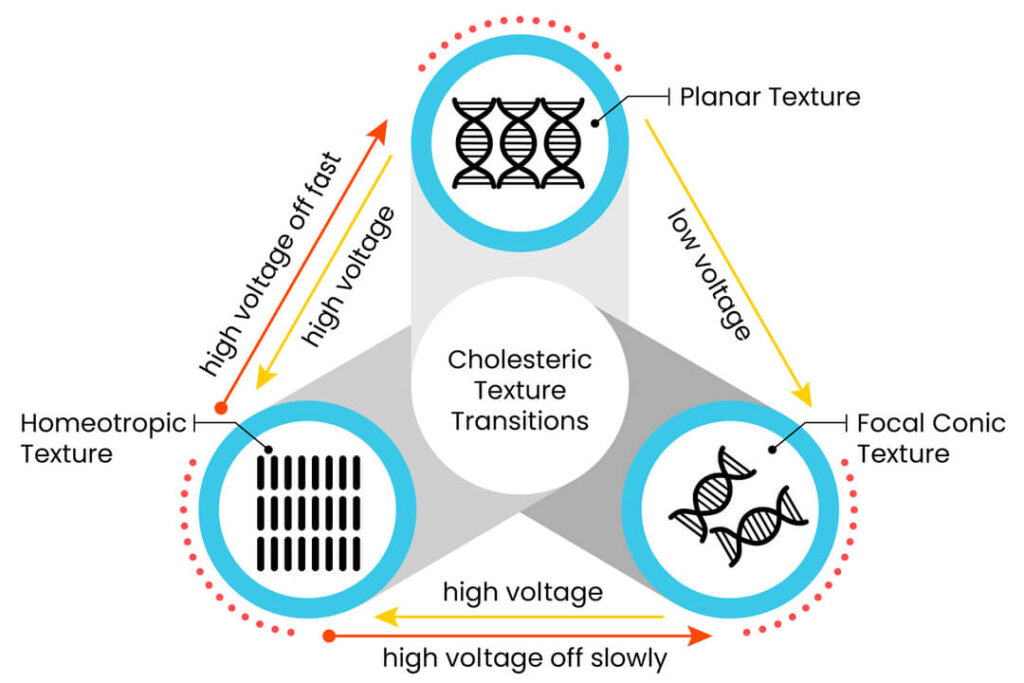
One of the most important technical characteristics of ChLCD is itsbistable properties: once the screen is switched, even if the power is completely cut off, the image remains unchanged. The power consumption in the static display mode approaches zero—only the moment the image is updated consumes power.
This property has two layers of significance in healthcare settings. First, for bedside cards, corridor wayfinding signs, and drug labels — which display static information 90% of the time — the cumulative energy savings are substantial. Second, the display does not go dark at the moment of a power cut, ensuring that information remains continuously visible in emergencies.
Fanless, silent design: compliant with ward noise management requirements
ChLCD has no backlight and no cooling fan, making the entire display system completely silent. In the ward environment, which is highly sensitive to ambient noise, this design detail has a direct impact on patient recovery experience.
Four key application scenarios for ChLCD in healthcare
Scenario 1: Bedside e-paper card
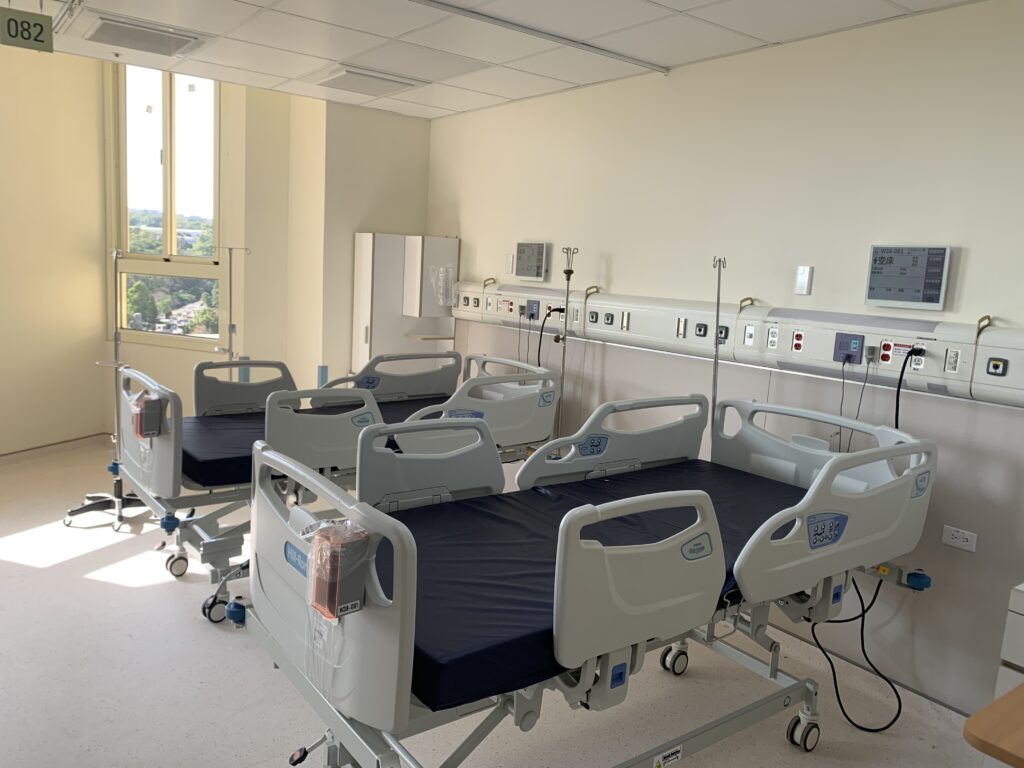
The existing problem: Paper bedside cards are prone to damage, may be illegibly handwritten, require nursing staff to manually swap them for updates, and are easily missed during peak hours — making them a common source of medical errors.
The ChLCD solution: Nursing staff can update bedside card content remotely with a single action — patient name, attending physician, nurse, dietary restrictions, allergy alerts, and surgical schedule — with full-color display allowing different information categories to be color-coded for instant recognition. Red for 'high-risk patient,' yellow for 'NPO (nil by mouth),' orange for 'isolation precautions' — the precision of this color-coding system is directly linked to patient safety.
The bistable characteristic ensures that bedside card information remains clearly visible even if the network is interrupted or a brief power outage occurs. This is not a convenience feature — it is a safety guarantee that ensures medical staff can still access the correct patient information at the critical moments when they need it most.
Scenario 2: Waiting area information display outside the operating room
Real-time display of surgical progress and estimated completion times is an effective way to reduce family anxiety and the volume of phone inquiries to nursing stations. However, the electromagnetic environment adjacent to operating rooms is extremely sensitive, and EMC requirements for display equipment are strict.
The low EMI characteristic of ChLCD — with no backlight driver circuit — makes it a suitable choice for information displays in operating room corridors and waiting areas. Combined with low-power wireless updates, waiting area information boards outside operating rooms can reflect surgical progress in real time while causing no electromagnetic interference to the precision medical equipment nearby.
Scenario 3: Corridor wayfinding and campus navigation at nursing stations
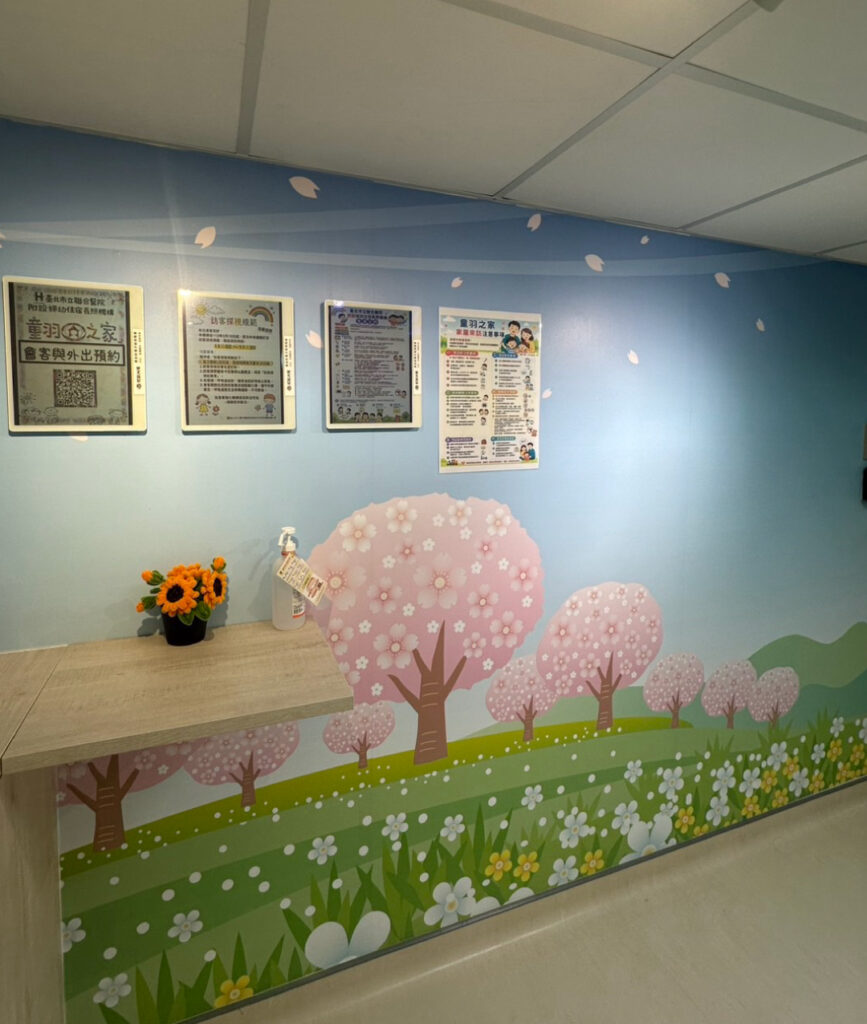
For the corridor wayfinding signs and floor/department indicators in large hospitals, the conventional approach involves printed stickers (difficult to update) or LCD screens (power-hungry, blue-light-emitting, requiring cabling). In the event of an infectious disease outbreak, emergency evacuation, or temporary department reallocation, static printed wayfinding signs are completely unable to respond to dynamic needs.
ChLCD dynamic wayfinding systems can update corridor routes, isolation zone boundaries, and temporary department arrangements in real time via the cloud. The bistable characteristic ensures that even if a system update is interrupted, the existing wayfinding information remains visible — an important safeguard for maintaining order within the hospital during emergency events.
Scenario 4: Outdoor campus wayfinding and inter-building navigation
The campuses of large medical centers are extensive, and outdoor wayfinding signs in parking areas and between buildings must operate around the clock, often in locations where running power cables is impractical. Conventional static signs cannot reflect changes in building usage, temporary parking restrictions, or emergency evacuation routes.
Rainbow Optoelectronics' Infinity Display® The solar panels are integrated directly into the display body, eliminating the need for power wiring for outdoor signage in the campus. Remote updates are achieved through low-power wireless communication (LoRa, NB-IoT). The dual-stabilization ensures that information remains available even in the event of a power outage. The operating temperature range of the Infinity Display® (–30°C to 85°C) ensures stable operation in various outdoor weather conditions.
An objective comparison with other healthcare display technologies
We do not shy away from comparison. The following is an objective assessment of ChLCD against the display technologies most commonly found in healthcare settings today, including an honest account of the applicable boundaries of each technology.
Conventional LCD still holds advantages in color rendering and update speed, making it suitable for scenarios requiring real-time imagery such as ultrasound displays and surgical navigation screens. EPD e-paper excels in low power consumption and low blue light emission, but its color rendering is limited. ChLCD simultaneously achieves all five dimensions — low blue light, full color, bistable retention, low EMI, and silent operation — giving it a unique position for static or low-frequency healthcare information display.
Scenarios where ChLCD is not suitable: diagnostic equipment displays requiring real-time image updates every second, surgical navigation systems, and radiological image review screens requiring extremely high contrast. In these scenarios, dedicated medical-grade LCD or OLED displays remain the more appropriate choice.
Key questions for hospital procurement evaluation
For hospital equipment procurement directors, nursing informatics teams, or medical equipment engineers evaluating display solutions, the following questions can help determine whether ChLCD is appropriate for a specific scenario:
What is the information update frequency for this display node? A bedside card updated once per shift and an emergency waiting information display updated every minute have fundamentally different technical requirements. Low-frequency update scenarios are where ChLCD delivers its greatest advantages.
Is the deployment location in an electromagnetically sensitive zone? Areas near MRI suites, operating rooms, and ICUs require special attention to EMC certification levels. ChLCD's low EMI characteristics provide a safer deployment basis in these areas, though evaluation based on the actual environment is always required.
Does the display need to retain its image when power is cut? If a black screen at this node during a power outage would create a safety concern, the bistable image-retention-on-power-loss characteristic of ChLCD is an irreplaceable feature.
Conclusion
The demands placed on displays in healthcare settings go beyond simply being clearly readable. It is about presenting the right information, in the right way, at the right time and place — with zero margin for error.
ChLCD technology is not a universal answer, but at the intersection of healthcare display's most challenging requirements — low blue light, low EMI, bistable image retention on power loss, silent operation, full-color rendering — it offers a solution combination that other technologies struggle to match simultaneously.
From the bedside e-paper card at the nursing station to the solar-powered wayfinding sign in the outdoor campus, every display node in a hospital's digital transformation deserves to have the right technology making the right choice.
Want to learn more about ChLCD specifications and deployment solutions for healthcare settings?