The EU requires 100 cities to achieve climate neutrality by 2030, and the digitalization of transport infrastructure is one of the core challenges. This article analyzes how ChLCD e-paper technology can help European cities deploy smart transportation displays at scale without increasing carbon emissions.
In 2022, the EU selected 112 cities from 377 applicants and required them to achieve climate neutrality by 2030. These cities — including Amsterdam, Rome, Munich, and Barcelona — are not merely policy implementers, but are positioned as 'innovation laboratories' paving the way for full EU climate neutrality by 2050.
Transport infrastructure is the most central — and most challenging — battlefield in this transformation.

In Europe, the density and historical depth of public transport systems is unmatched anywhere else in the world. From the century-old stations of the Paris Métro, to Amsterdam's tram network, to the bus systems of Scandinavian cities, these infrastructures were designed long before digital displays — or their power requirements — were ever considered.
This is the crux of the problem: European cities want to digitalize their transport information, but their historic buildings and existing infrastructure make running power cables extremely costly — and sometimes outright impossible.
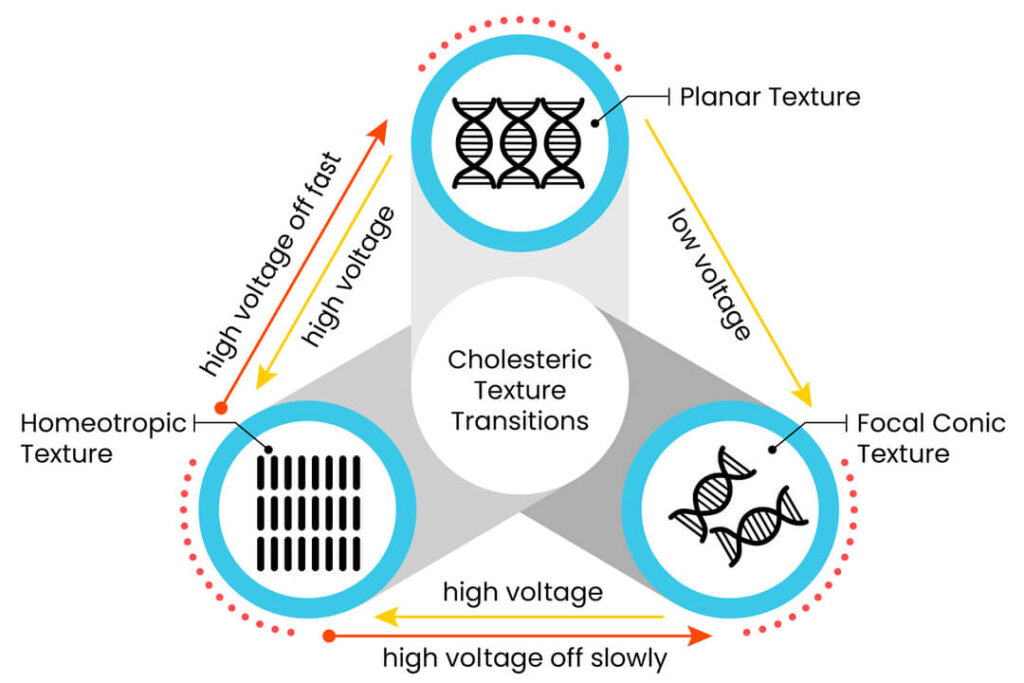
ChLCD (Cholesteric Liquid Crystal Display) — with its ability to operate without an external power source — offers a response to this problem that is uniquely meaningful in the European context.
The unique challenge of smart transportation in Europe
Europe's transport digitalization challenges are fundamentally different from those in other regions. Understanding these differences is key to understanding why technology choices matter so much here.
Historic buildings: the 'no-cable zone'

Haussmann-era apartment buildings in Paris, ancient plazas in Rome, medieval cobblestone streets in Prague — European cities are filled with historic buildings and public spaces where arbitrary drilling or excavation is simply not permitted. Many bus stops or metro exit information boards cannot legally undergo electrical installation work.
This is not just a technical problem — it is a regulatory one. Many European city centers are protected under UNESCO designation or national heritage laws, and any underground works require lengthy approval processes.
High-density, dispersed transport nodes
One hallmark of European public transport is its extremely high stop density. A mid-sized European city may have thousands of bus stops, hundreds of tram stops, and regional rail stations spread across the suburbs. These nodes are widely distributed and highly varied, with many located in suburban or rural areas where electrical infrastructure is weak.
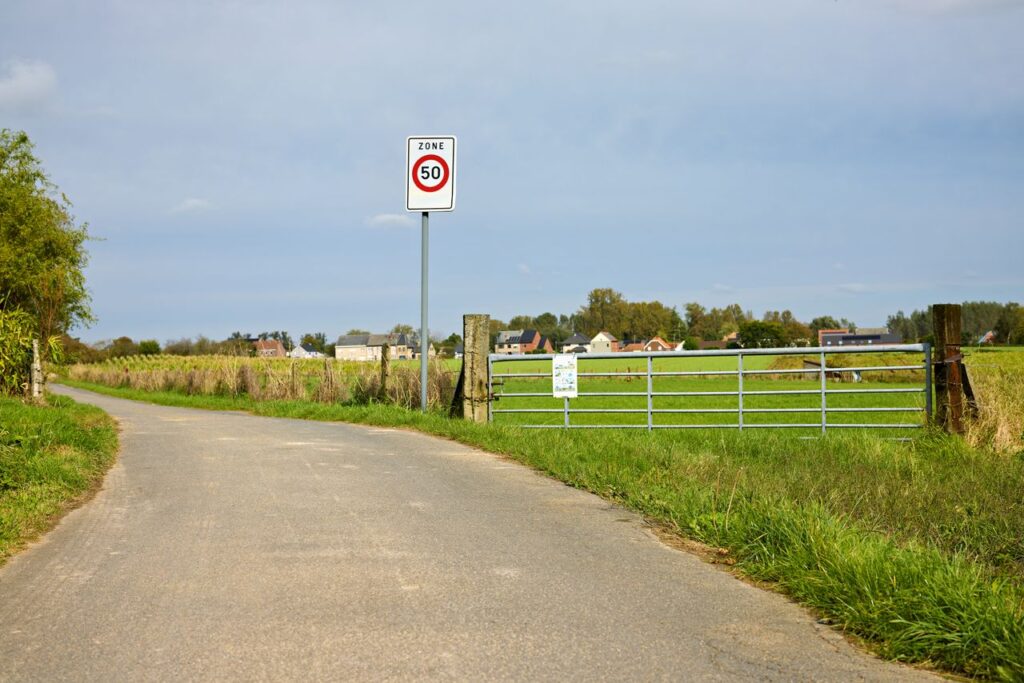
Running power cables to all of these nodes and installing conventional LED/LCD displays would involve infrastructure costs that often dwarf the cost of the display hardware itself.
ESG procurement pressure: not just 'digitalization' — 'low-carbon digitalization'
Under the EU's Sustainable and Smart Mobility Strategy, public procurement in European cities is increasingly constrained by carbon emission metrics. Many city governments, when evaluating transport display equipment, must now provide quantifiable carbon footprint data in addition to functional and cost assessments — to comply with their Climate City Contract commitments.
傳統 LED 顯示器雖然亮眼,但 24 小時持續耗電的特性,在 ESG 評估框架下是一個越來越難以接受的缺點。
Three core properties of ChLCD addressing three European realities
Property 1: Power-independent operation — solving the wiring problem in historic districts
ChLCD features 'bistable' characteristics: once an image is displayed, it remains visible even with the power completely cut — only the moment of image switching consumes electricity. This means power consumption in a static display state approaches zero.
IRIS Optronics' Infinity Display® takes this further by integrating a solar panel directly into the display unit, allowing it to generate its own power from ambient light to supply the energy needed for image updates. Under normal European outdoor lighting conditions, the entire system requires no external power source and has a design lifespan of over 10 years.
This is enormously significant for Europe's historic districts: no road excavation, no electrical installation permits, no interference with any existing municipal infrastructure. A single installer with tools can complete installation at a historic plaza bus stop in a single day, with zero impact on the surrounding environment.
Property 2: Reflective full-color display — adapting to Europe's extreme climate conditions
Europe's climate spans extremes: Helsinki winters can reach -20°C while Athens summers exceed 40°C; salt spray corrosion along the North Sea coast and condensation-frost in the Alps are all real challenges that displays must withstand.
ChLCD operates across a temperature range of -30°C to 85°C, covering the vast majority of European outdoor environments. More importantly, its reflective display principle delivers stable visibility across both bright and dim conditions:
During the long, dim winter days of Northern Europe, reflective displays still provide sufficient contrast; under Mediterranean sunlight, the stronger the ambient light, the better the display performs — a striking contrast to the problem of traditional LCD screens being difficult to read in direct sunlight.
Furthermore, the full-color display capability of over 16 million colors allows European cities to render complete route maps, multilingual information (especially important in tourist cities), and color-coded identification systems for different transport modes.
Property 3: Quantifiable carbon reduction — directly supporting ESG procurement metrics
For European city governments drafting 'Climate City Contracts,' calculating the carbon footprint of procurement decisions is a concrete administrative requirement, not merely a reputational concern.

Infinity Display® offers a clearly quantifiable environmental benefit claim: no external power source, no battery replacement, zero operational carbon emissions. By contrast, a conventional outdoor LED display consumes approximately 500 to 2,000 kWh per year (depending on size and brightness), which — calculated at Europe's average electricity carbon intensity — produces roughly 100 to 400 kg of CO₂ per unit annually.
When a city needs to deploy thousands of transport information displays, the cumulative effect of this difference is substantial — and fully quantifiable for inclusion in ESG reports.
Concrete applications of ChLCD in European smart transportation
Scenario 1: Bus and tram information stops in historic city centers
This is the most representative application scenario in a European context. Bus stops near the Colosseum in Rome, the medieval squares of Bruges, the Ringstrasse in Vienna — electrical works at these locations are nearly impossible, yet travelers' need for real-time transport information is most acute.
Infinity Display® enables these locations to install dynamic displays for the first time, receiving and showing real-time schedules, delay notifications, and multilingual tourist guidance via low-power wireless communication (LoRaWAN, NB-IoT) — without touching any historic structure.
Scenario 2: Regional public transport in suburban and rural areas
Europe's inter-city public transport systems often extend into low-population-density rural areas. Stops on these routes are dispersed and electrical infrastructure is weak, making the deployment cost of traditional digital signage extremely high — and concentrating the information gap precisely among the populations most dependent on public transport: the elderly, lower-income residents, and car-free households.
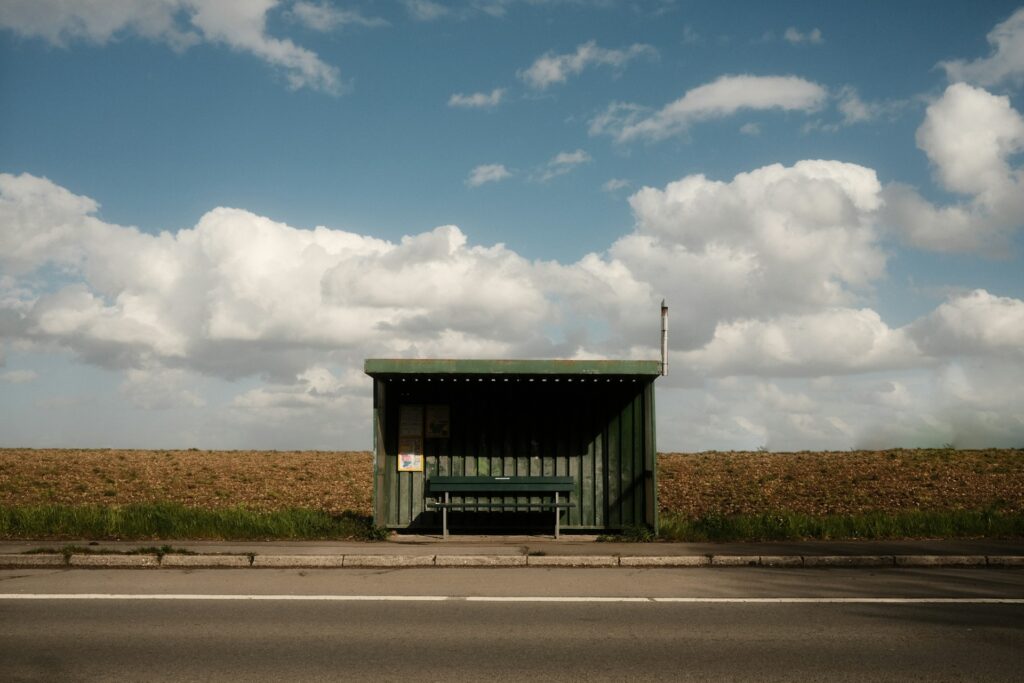
ChLCD's power-free deployment capability significantly reduces the digitalization cost for these stops, helping to close the urban-rural information divide. This also aligns with the EU's 'Just Transition' policy spirit: climate action should not benefit only large cities.
Scenario 3: Passenger information systems on cross-border rail corridors
The EU's Sustainable and Smart Mobility Strategy sets a target of doubling high-speed rail traffic by 2030. As cross-border rail routes expand, passengers at transfer stations need real-time, multilingual information displays.
Many small and medium-sized European regional rail stations face renovation needs but cannot install large-scale conventional power-driven display systems due to budget and infrastructure constraints. ChLCD's low installation cost and power-cable-free characteristics make it a practical choice for these stations.
Scenario 4: Dynamic information displays for cycling infrastructure
Amsterdam, Copenhagen, Ghent — many European cities are massively expanding their cycling infrastructure as a core strategy to reduce automotive carbon emissions. Directional guidance, road condition alerts, and real-time bike-share station availability along these routes are currently presented mostly as static signage.
ChLCD displays can deploy dynamic real-time information boards along cycling routes with no electrical infrastructure whatsoever, helping cities build a truly smart Active Mobility network.
Scenario 5: Multilingual dynamic displays at urban tourism information points
Europe welcomes hundreds of millions of international visitors each year. At airports, train stations, ports, and the information points of major tourist attractions, multilingual dynamic displays are a core need for enhancing visitor experience.
ChLCD's full-color display capability (16 million colors) combined with cloud content management allows cities to instantly switch between different language versions of information on the same display, and update content according to the season, time of day, or special events — without incurring high operational electricity costs.
The European competitive landscape: ChLCD's differentiated positioning
In the European transport display market, mainstream technology solutions currently fall into roughly three categories:
Conventional EPD e-paper (such as the E Ink series): Some cities have adopted these on a pilot basis. Advantages include low power consumption; disadvantages include limited color rendering (most are still grayscale or 4,096 colors) and an inability to deeply integrate solar energy.
Conventional EPD e-paper (such as the E Ink series): Some cities have adopted these on a pilot basis. Advantages include low power consumption; disadvantages include limited color rendering (most are still grayscale or 4,096 colors) and an inability to deeply integrate solar energy.
ChLCD (IRIS Optronics): Still a relatively emerging technology option in the European market, but its ability to simultaneously achieve 'full color + low power consumption + solar integration' gives it a unique positioning in the current competitive landscape.
Evaluation checklist for European procurement bodies
For decision-makers at European city governments or transport authorities evaluating ChLCD solutions, the following questions can help determine suitability:
Does the deployment site have historic building protection restrictions? If so, ChLCD is one of the few technology options that can fully circumvent the electrical installation approval process.
Has your city made a 2030 climate neutrality commitment? Infinity Display®'s zero operational carbon emission characteristics can be directly converted into quantifiable carbon reduction data for a 'Climate City Contract.'
What is your deployment scale? When deploying ChLCD at scale, the saved electrical cabling engineering costs are often more significant than the hardware itself. The larger the scale, the more pronounced the cost advantage over conventional solutions.
Do your sites require multilingual support? The multilingual needs of European tourist cities and cross-border transport hubs can be readily met through ChLCD's full-color cloud management system.
Are maintenance resources adequate? Infinity Display® is designed to minimize on-site maintenance requirements. For suburban or rural public transport systems with dispersed stops, this represents a significant long-term cost saving.
Conclusion
Europe is undergoing an unprecedented urban transformation. 103 cities have received the 'EU Mission Label,' committing to climate neutrality by 2030 — this is not merely a political declaration, but a requirement to make different technology choices in every detail of infrastructure.
Transport information displays are a seemingly small, yet far-reaching element of this transformation. They are numerous (cities often have thousands of nodes), widely distributed (from historic centers to remote rural areas), and heavily used (millions of passengers daily) — meaning any technology choice's carbon emission impact is amplified by the product of time and scale.
ChLCD is not a universal answer, but for some of Europe's most intractable transport digitalization challenges — wiring in historic districts, power for dispersed stops, ESG procurement standards — it offers a solution path that other technologies struggle to satisfy simultaneously.
2030 is not far away. The technology is ready.
Want to learn more about Infinity Display® specifications and deployment solutions for European transport scenarios?